If you sell to restaurants, caterers, corporates, and events, your customers are asking one thing:
“What’s the most sustainable option that won’t create new problems?”
Here’s a practical way to frame the decision.
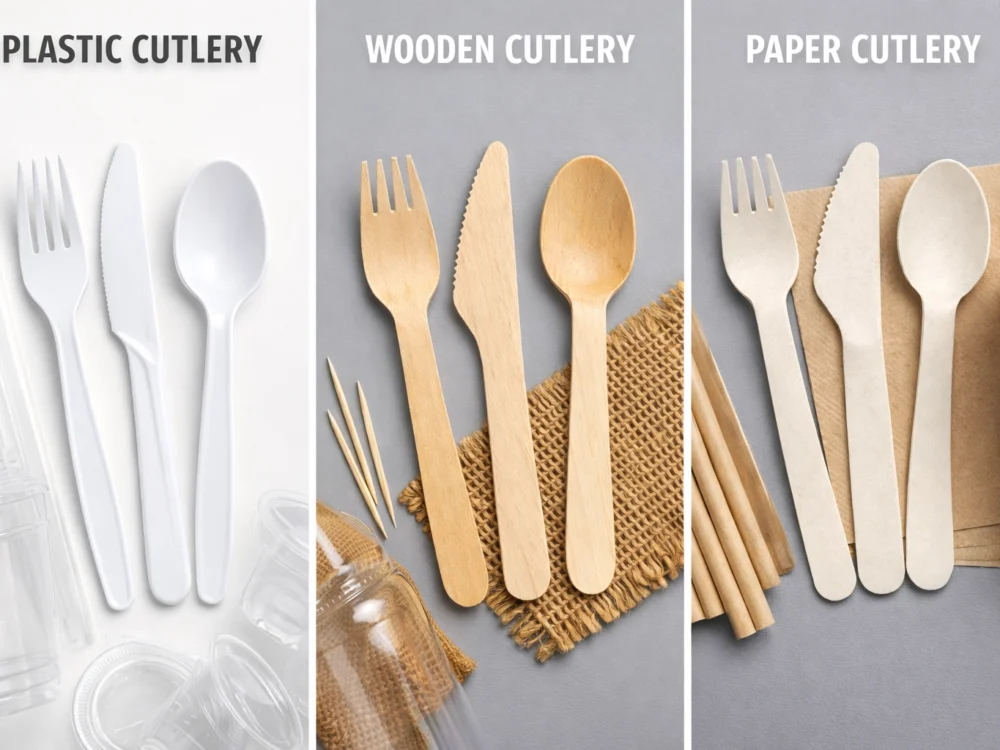
The baseline: plastic cutlery
Pros: cheap, consistent, strong, widely available
Cons: persistent pollution, low recycling practicality for small items, high litter risk
Globally, plastic waste scale is enormous and growing, and recycling rates remain low.
Policy direction is also tightening: cutlery is explicitly included in EU SUP action.
Bottom line: plastic is operationally easy but environmentally costly.
The “green” substitute many choose: wooden cutlery
Pros: biodegrades, non-plastic, can perform well
Cons: sustainability depends on sourcing; can carry hidden footprint in processing; still “single-use” consumption
Wood can be better than plastic on many metrics in some studies, but it’s not automatically perfect. It still has impacts, and comparisons vary by product type and disposal route.
Bottom line: wooden can be an improvement, but brands must prove responsible forestry and efficient production.
The system-friendly alternative: paper-based cutlery
Pros: lower risk of long-term microplastic pollution, can align with composting systems, strong storytelling around circularity
Cons: performance must be engineered; coatings/additives matter; end-of-life depends on collection and composting reality
UNEP’s lifecycle-driven work on tableware alternatives supports the idea that “best option” depends on the full system, not just the material label.
Bottom line: paper-based can be the best “fit” when designed for performance and paired with clear disposal pathways.